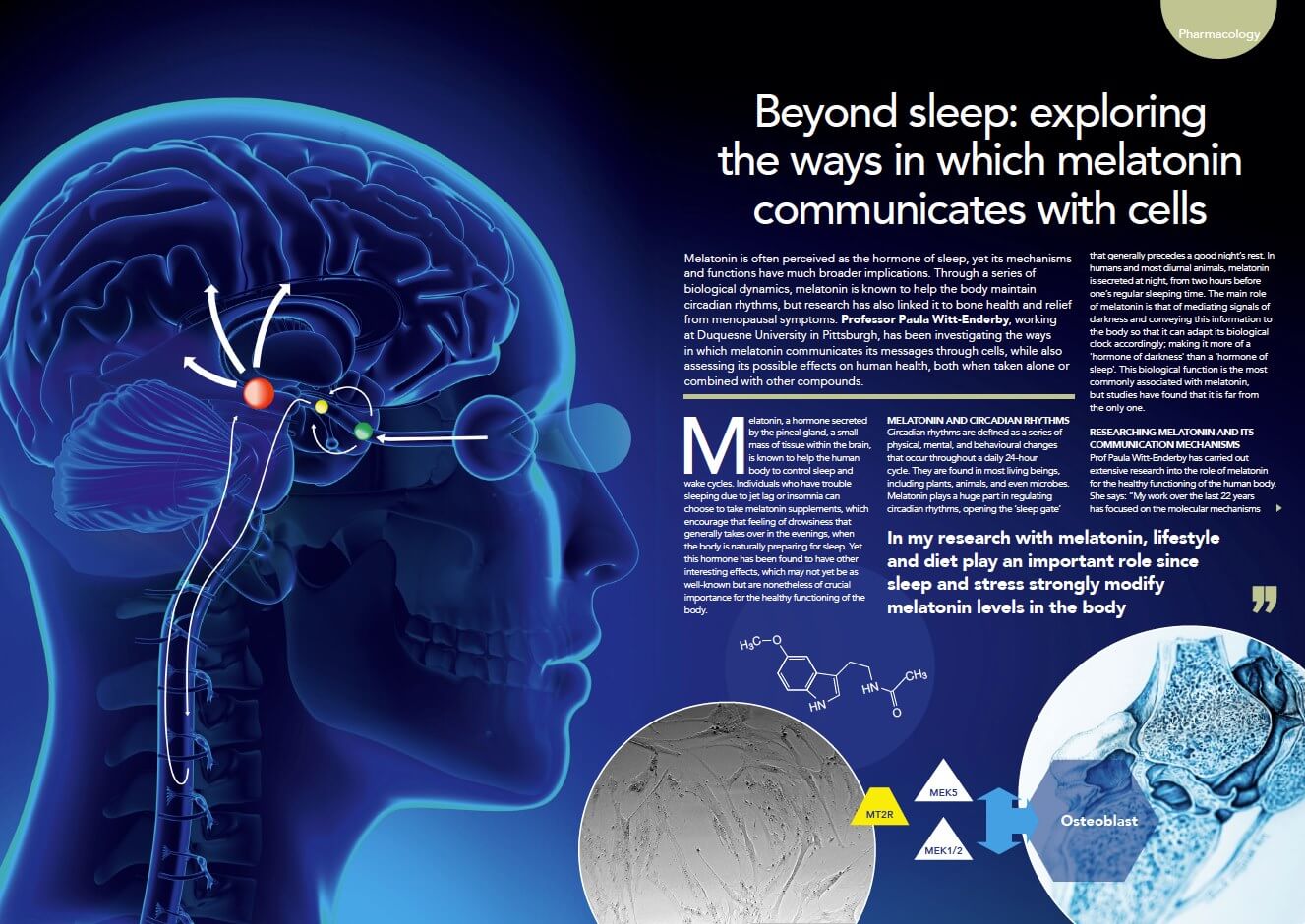
Melatonin is often perceived as the hormone of sleep, yet its mechanisms and functions have much broader implications. Through a series of biological dynamics, melatonin is known to help the body maintain circadian rhythms, but research has also linked it to bone health and relief from menopausal symptoms. Professor Paula Witt-Enderby, working at Duquesne University in Pittsburgh, has been investigating the ways in which melatonin communicates its messages through cells, while also assessing its possible effects on human health, both when taken alone or combined with other compounds.