Recent studies have indicated that 1 in 3 people worldwide struggles with poor quality sleep. Additionally, natural production of melatonin and GABA tends to decline with age, particularly after the age of 60. As populations age and screen-based technologies become increasingly integrated into daily life, interest in sleep-support solutions continues to grow.
Understanding how the sleep–wake cycle functions—and how modern habits may disrupt it—can be an important step toward improving overall sleep health.
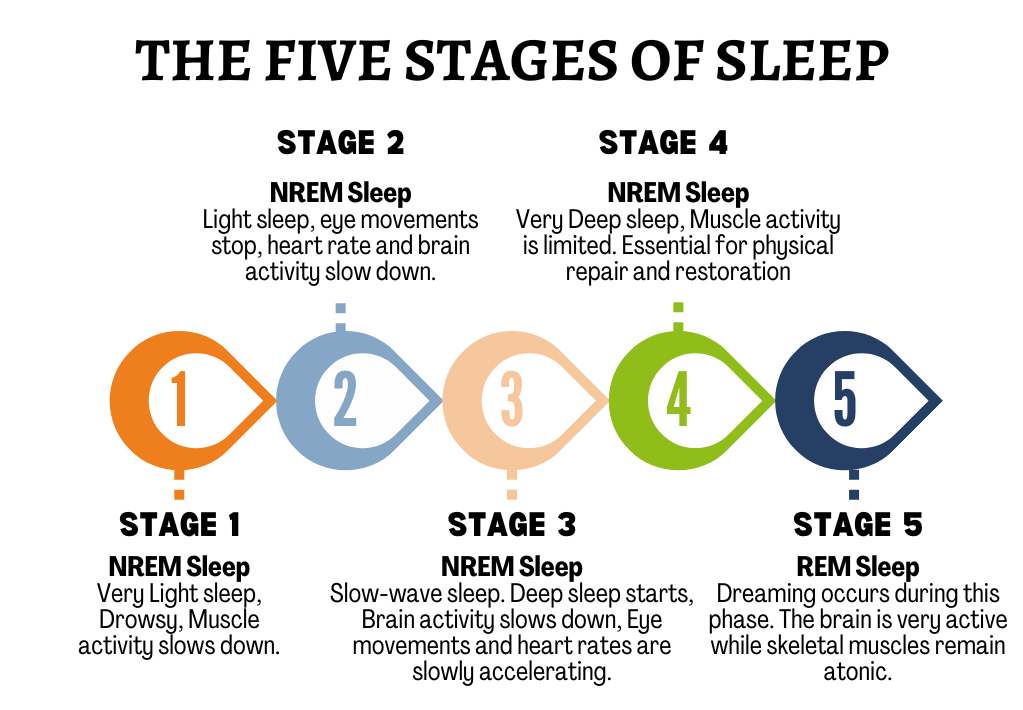
REM and Non-REM Sleep Cycles
What are sleep cycles?
Sleep cycles refer to the natural, recurring patterns of sleep stages that individuals go through during a typical night’s rest. Each sleep cycle consists of distinct stages, and these cycles play a crucial role in facilitating restorative and restful sleep. On average, a person experiences 4 to 6 sleep cycles during a night of sleep, with each cycle lasting approximately 90 to 120 minutes. Let’s delve deeper into what happens during each sleep cycle.
What are the 5 sleep cycles?
1. Stage 1 – NREM (Non-Rapid Eye Movement) Sleep:
The sleep cycle begins with stage 1, which is the lightest stage of sleep. During this phase, you are in the transitional state between wakefulness and sleep. Your brain produces theta waves, and your muscles start to relax. This stage lasts for only a few minutes.
👉 This is your body letting go
2. Stage 2 – NREM Sleep:
In stage 2, your brain activity continues to slow down, and your body temperature decreases. Sleep spindles and K-complexes, which are brief bursts of brain activity, help to regulate and protect sleep. This stage accounts for the largest portion of a sleep cycle and lasts for about 50% of the cycle’s duration.
👉 Prepares the brain and body for deep restoration
3. Stage 3 – NREM Sleep:
Stage 3 is the transition from light sleep to deep sleep. It is characterized by slow delta brainwaves. This stage is vital for physical restoration, as growth hormones are released, and the body repairs tissues and muscles. It is also when the body is most difficult to wake up.
👉 Immune system activation + physical recovery
4. Stage 4 – NREM Sleep (Deep Sleep):
Also known as slow-wave sleep (SWS), this is the deepest stage of sleep. The brain almost exclusively produces delta waves during this stage. Deep sleep is critical for cognitive restoration, memory consolidation, and overall well-being. It is during this stage that the brain clears out metabolic waste and toxins, promoting brain health.
👉 This is where true healing happens
5. Stage 5 – REM (Rapid Eye Movement) Sleep:
After completing the NREM stages, the cycle transitions into REM sleep, which is characterized by rapid eye movements and increased brain activity. Despite the name, the rest of the body’s muscles are mostly paralyzed, likely to prevent acting out dreams. REM sleep is essential for cognitive processing, emotional regulation, and memory consolidation. Vivid dreaming often occurs during this stage.
👉 Essential for mental clarity, mood, learning, and creativity

How It All Works Together
- A full sleep cycle lasts ~90 minutes
- You experience 4–6 cycles per night
- Early night = more deep sleep
- Later night = more REM sleep
Why This Matters
- Poor sleep disrupts stress hormones, inflammation, pain perception, cognition
- Deep sleep + REM are often the first to suffer under stress, aging, and anxiety
- Supporting relaxation, nervous system balance, and recovery helps all stages work better

Each sleep cycle typically lasts around 90 to 120 minutes, and as the night progresses, the proportion of time spent in REM sleep increases while the time spent in deep sleep decreases. The first sleep cycles usually contain more deep sleep, while the later cycles have more REM sleep.
Why are sleep cycles important?
Experiencing 4 to 6 sleep cycles in one night allows us to go through all these essential stages of sleep multiple times, ensuring that we get the restorative benefits required for physical health, mental well-being, and optimal cognitive functioning during wakefulness.
Sleep plays a crucial role in maintaining overall health and is vital for:
- Memory consolidation
- Immune system function
- Emotional regulation
- Overall quality of life
Consistently obtaining enough good-quality sleep is essential for a healthy and balanced life.
Deep sleep, or stage 4 NREM sleep, facilitates essential bodily repair and growth, promoting optimal immune function and muscle recovery.
REM sleep, on the other hand, is linked to memory consolidation, emotional regulation, and cognitive processing.
By comprehending the intricacies of these cycles, individuals can recognize the significance of achieving a balanced and restful night’s sleep. Prioritizing the recommended 7-9 hours of sleep per night and allowing the body to complete multiple cycles ensures that the brain can clear out toxins, memories are solidified, and overall cognitive performance is enhanced.
Source: Psychology -https://pressbooks-dev.oer.hawaii.edu/psychology/chapter/stages-of-sleep/


